Adoption is a budget line, not a hope
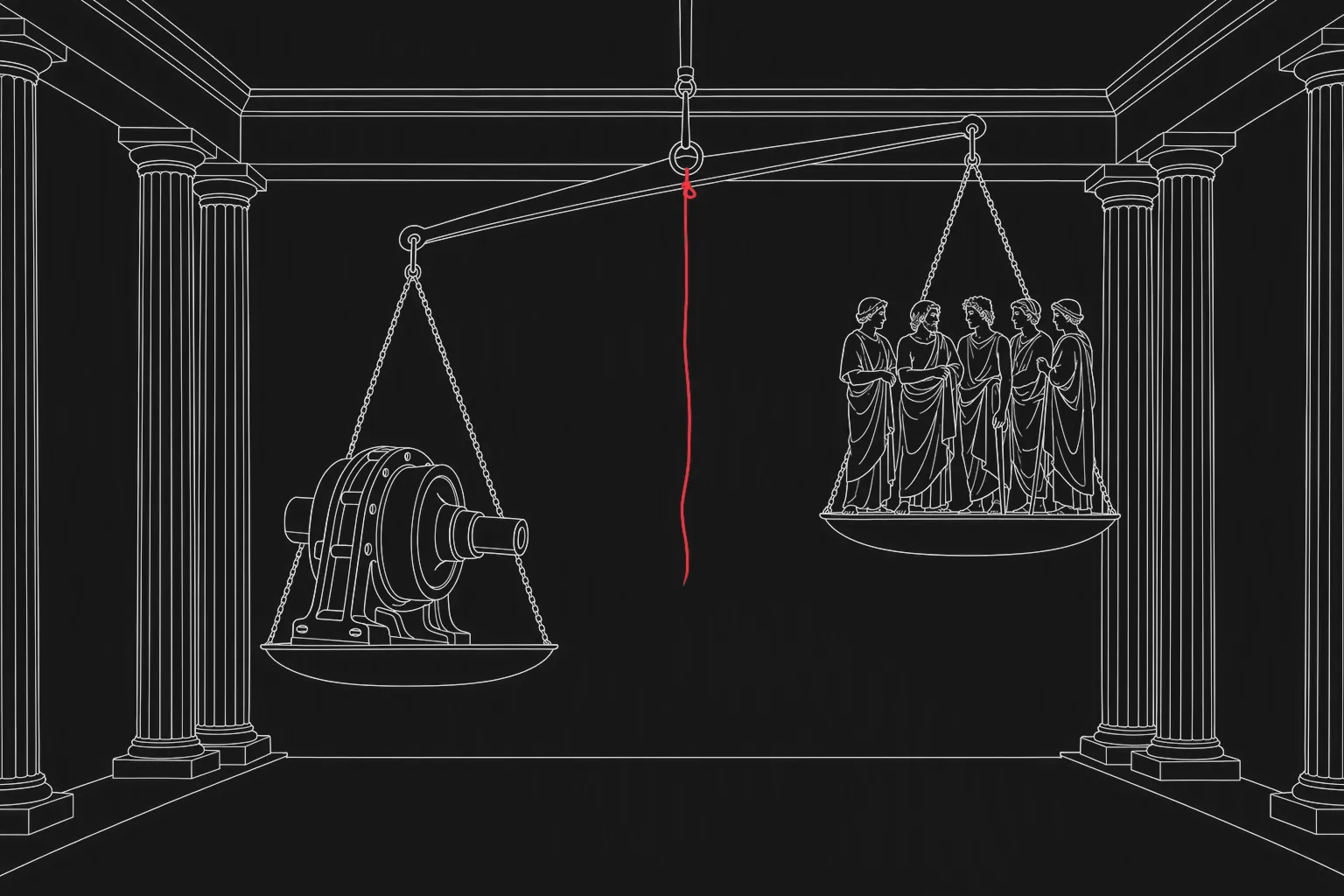
Open any transformation business case and the shape is consistent. Licences, infrastructure, integration and implementation days are costed to the euro. Change management appears once, as a paragraph, usually near the end, with no number attached.
That imbalance is not an oversight. It is a prediction, and it is usually accurate.
What gets funded gets done
Work with a budget line has an owner, a plan and a review. Work described in a paragraph has an intention. When the schedule tightens — and it always does — the intention is what gets deferred, because deferring it produces no invoice and no immediately visible consequence.
Six months later the technology is live and the behaviour is unchanged, which is the most common outcome in this field and almost never attributed to the decision that caused it.
What adoption actually costs
Not a training day. The realistic components look like this.
Time from the people who will use it. They have a job. Learning a new way of doing it comes out of the same hours, and if nobody accounts for that, either the learning or the job gives way.
Middle management attention. The layer that translates a change into what people actually do is normally the most loaded layer in the company before anything new arrives. Adoption runs through them or it does not run.
A temporary drop in output. Real, predictable, and usually unbudgeted. Teams get slower before they get faster, and a programme that has not planned for that reads the dip as failure and reverses.
Documentation and support during the first weeks. Not a manual — somebody reachable while people are stuck, because the first time somebody gets stuck and cannot get help is the moment they revert to the old way and stay there.
Rework. The first version of any process change is wrong in ways only contact with reality reveals. Budgeting one round of revision is realism; budgeting none is optimism with a schedule attached.
Infographic
What goes in the adoption budget
- Time from usersLearning the new way of working comes out of the same hours.
- Middle management attentionThe layer that translates a change into what people actually do.
- A temporary output dipTeams slow down before they speed up. That dip has to be planned.
- Support in early weeksSomebody reachable when people get stuck. Not a manual.
- One round of reworkThe first version of any process change will be wrong somewhere.
How to put a number on it
There is no formula, and the useful discipline is simpler than one. For the first change, cost it explicitly: how many people, how many hours each, over how many weeks, plus the named person who owns it and the output dip you expect.
The number is usually uncomfortable. It is also usually smaller than the cost of the programme that failed quietly, which is the honest comparison and the one nobody makes.
The signal worth watching
Ask who is accountable for people using it. Not for delivering it — for people using it, measured.
If the answer is a project manager, adoption is nobody’s job, because a project manager is accountable for delivery and moves on at go-live. If the answer is a line manager whose own numbers depend on it, the change has a chance.
That question predicts outcomes better than any technical due diligence, and it costs one sentence to ask.
What we do about it
In an AI transformation engagement, adoption is scoped and costed alongside the build rather than after it: who loses something and what is done about it, who carries it in each team, the output dip and its duration, and the two or three measures that will show whether people are actually working differently.
It makes the business case less attractive on paper. It makes the outcome considerably more likely.
- change management
- adoption
- programmes
- budgeting