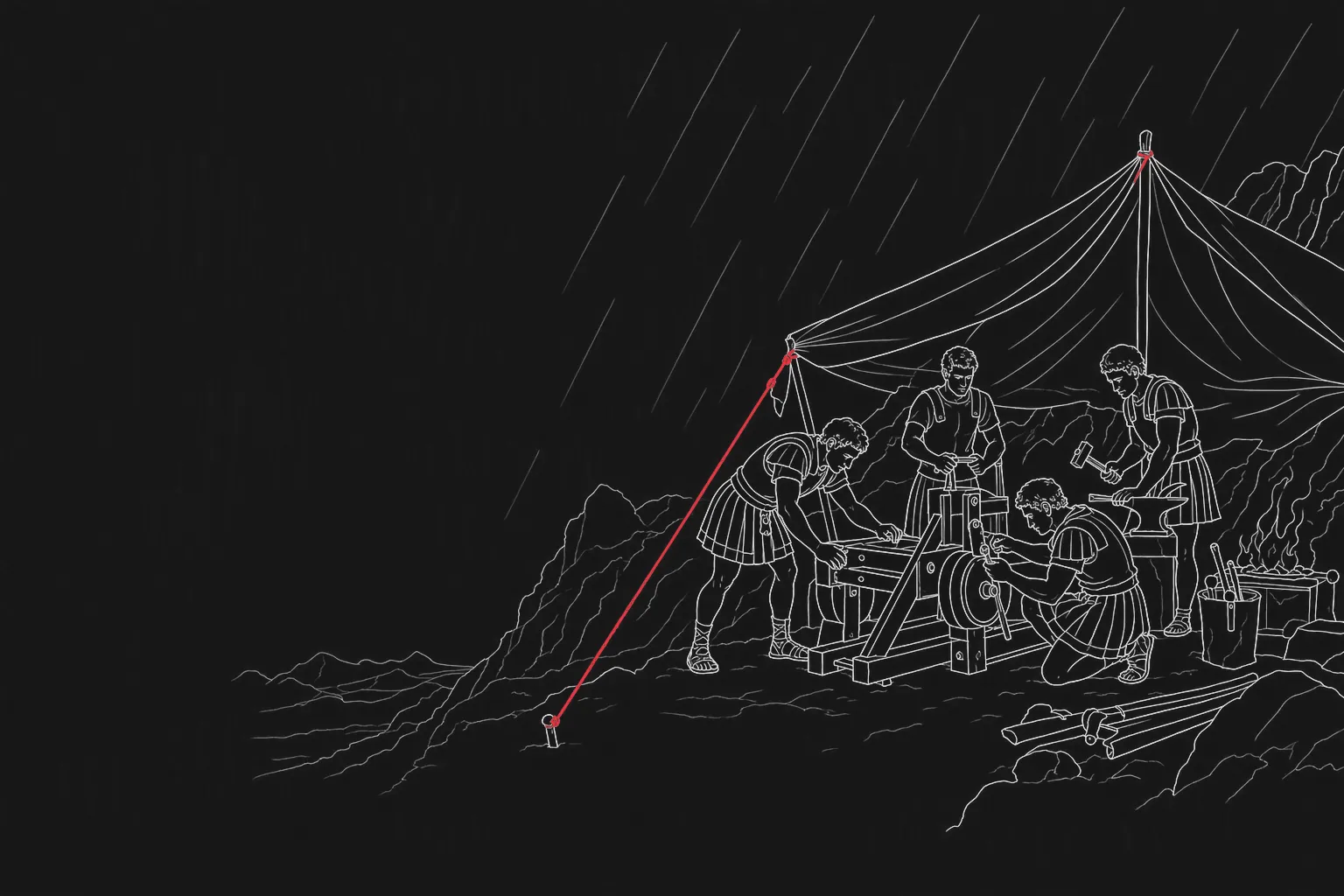
It worked in the office. The site has no signal, and the operator is wearing gloves
Field deployment is where AI projects meet reality: patchy connectivity, hardware that has to survive dust and temperature, devices used one-handed, and people who will abandon anything that takes longer than the old way. The engineering is different, and so is the definition of done.
- Something that works where the work is. On the floor, in the cab or on site, in the conditions that actually exist rather than the ones assumed.
- Offline tolerance. Degrading sensibly without a connection and reconciling cleanly when one returns, because intermittent is the normal state and not the exception.
- Interfaces for the environment. Usable with gloves, in glare, one-handed, in noise. Adoption is decided here more often than by the model.
- A supportable estate. Devices enrolled, updatable, monitorable and replaceable without a visit for every fault.
What is delivered
Site assessment
Connectivity, power, mounting, lighting, noise, temperature and who actually holds the device. Done on site, because none of this survives being assumed from a meeting room.
Edge and cloud split
What runs on the device, what runs centrally and what happens when the link is gone. The decision that determines whether the system is usable at all.
Offline-first data flow
Local queueing, conflict handling and reconciliation, so a shift can complete without a connection and nothing is silently lost when it returns.
Field interface
Large targets, high contrast, minimal typing, voice or scan where hands are busy, and an obvious state so nobody wonders whether it saved.
Device management
Enrolment, updates, remote wipe and health monitoring. An estate of unmanaged devices becomes unsupportable within a year.
Pilot and rollout plan
One crew or one line first, with the failures collected, before anything is rolled out to everybody.
How it runs
- 01
Go and look
A shift on site with the people who will use it. Every field project that skipped this rediscovers why it should not have.
- 02
Prototype in the environment
Tested in the actual conditions, not on a desk. Glare, gloves and dropped connections are requirements, not edge cases.
- 03
Pilot with one crew
Small, watched closely, with a route back. The complaints from this group are the specification for the rollout.
- 04
Roll out and support
Staged, with device management and a support path that does not require a site visit for every fault.
A good fit when
- The work happens away from a desk: production, logistics, service, construction, utilities, agriculture.
- An office-built system has been rejected by the people who were supposed to use it.
- Connectivity is unreliable and the current answer is paper.
- Inference has to happen locally for latency, cost or data reasons.
Not the right service when
- Everything is in an office with reliable connectivity. Then this is ordinary application engineering.
- You need certified safety-critical or explosion-proof equipment. That is a specialist supplier and we will say so rather than take the work.
- The process itself is undefined. In the field this is worse than in an office, because there is no time to work it out during a shift.
Frequently asked questions
Which hardware do you use?
Can models run on the device?
What about safety-critical systems?
How do you handle patchy connectivity?
How long does a first deployment take?
Keep reading
AI glasses: from a demo to a pilot that proves something
Glasses with an AI agent demo beautifully. A pilot worth funding names one task, the data it will touch, how it is measured, what it costs and what stops it.
The device estate is the line missing from the business case
Field AI business cases count the model and the software and forget the devices. Who enrols, updates and replaces them decides the real cost of owning the system.
A pilot with one crew is a specification, not a demonstration
Field pilots are often run to prove that a system works. The useful ones are run to find out how it fails, and they need a different crew, scope and exit criteria.
Go and watch a shift before you write a line of code
Field systems are rejected for reasons that never appear in a requirements document, and every one of them is visible within two hours of standing where the work happens.
Has your AI provider ever stood on a shop floor?
Field AI projects fail on connectivity, gloves and devices nobody manages. A handful of questions in the first meeting shows whether a provider knows that.
Other services
AI Strategy
Which decisions are worth changing, what each would cost, and what would measurably be different. Including the ones where the answer is not AI.
Read articleAI Transformation
The part after the strategy: sequencing against real capacity, changing how work is done, and making adoption somebody's job rather than a hope.
Read articleAI Agents Engineering
Agents that do work rather than answer questions — with bounds, tools, approval gates and a decision log that survives the first incident.
Read article